



Inference-time scaling on Red Hat AI: Improving model reliability
How inference-time scaling techniques on Red Hat AI improve model reliability by letting models spend more compute at generation time on harder problems.

How inference-time scaling techniques on Red Hat AI improve model reliability by letting models spend more compute at generation time on harder problems.

Particle filtering offers a principled alternative to majority voting and beam search for inference-time scaling, improving LLM reasoning by pruning unpromising chains of thought early.
Orthogonal Subspace Fine-Tuning (OSFT) prevents catastrophic forgetting during LLM fine-tuning by constraining weight updates to directions that preserve existing model capabilities.
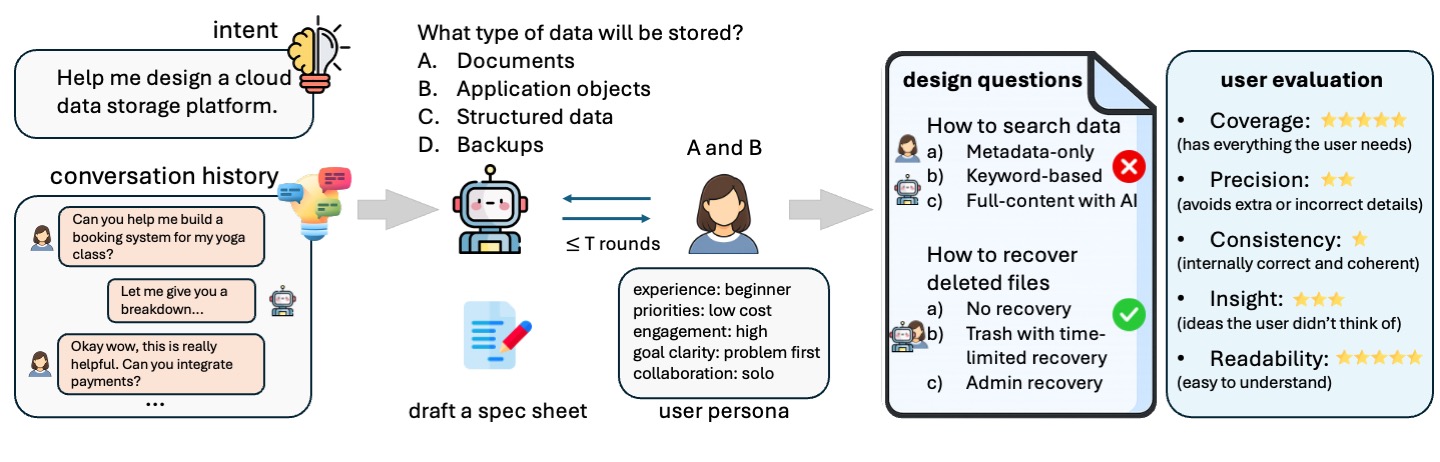
SpecBench benchmarks how well AI coding agents collaborate with users to turn vague ideas into structured specifications, and introduces Buddy, an agent that drafts better specs with fewer questions.
Training Hub v0.4.0 adds LoRA and QLoRA fine-tuning powered by Unsloth, enabling fast, cost-effective model adaptation with roughly 70% less VRAM than full fine-tuning.
A four-step pathway for scaling LLM fine-tuning from local experimentation to production deployment using Training Hub, OpenShift AI, Kubeflow Trainer, and AI pipelines.

IBM Technology explores how synthetic data generation with SDG Hub enables smarter AI workflows.
How SDG Hub enables teams to automatically create grounded evaluation datasets with question-answer-context triplets, transforming RAG tuning from intuition-driven to measurable.

Red Hat explores how Training Hub simplifies AI model fine-tuning with a unified interface across multiple post-training algorithms.